

Table of Contents
Most people shopping for a Jetboil do not want a camp kitchen. They want hot water, fast, with no fuss.
Two cups for coffee at 6 a.m., half a liter for a freeze dried dinner after a long day on the trail. That is the one job the Jetboil Flash was built to do, and it does it better than almost anything else near its price.
It is also the wrong stove for a fair number of buyers, so it is worth knowing which group you are in before you spend the money.
One note before the verdicts. This review is built from Jetboil’s published specs and years of owner feedback, not from side by side lab testing, and where a number is the company’s own claim I say so.
Quick Comparison
If you are skimming, this is the whole article in three rows.
| Stove | Best for | Key spec |
|---|---|---|
| Jetboil Flash | Solo and duo hikers who only boil water | Half a liter boiled in about 100 seconds |
| MSR WindBurner | Wind, storms, and exposed campsites | Enclosed radiant burner that shrugs off gusts |
| Jetboil MiniMo | People who cook real food at camp | Regulated valve with true simmer control |
Specs and What Comes in the Box
The numbers below are Jetboil’s, and they hold up to what owners report in fair conditions.
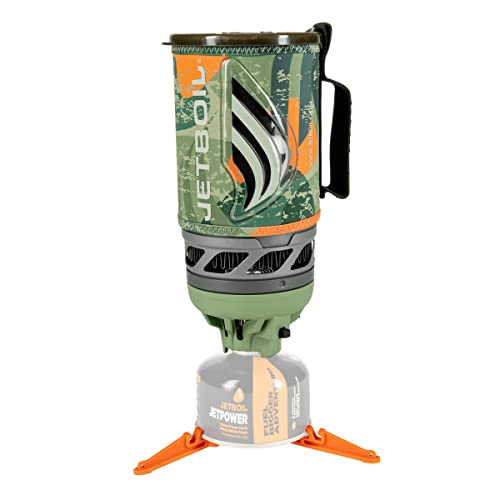
- Weight 13.1 oz for the whole system
- Pot 1 liter insulated FluxRing cooking cup
- Boil time about 100 seconds per half liter, per Jetboil
- Fuel 100 gram isobutane propane canister, sold separately, nests inside the pot
Everything stows inside the cup. The burner, the fold out canister stabilizer, and a 100 gram fuel canister all fit.
- Lid: The plastic lid has a pour spout and strainer.
- Bottom cover: It doubles as a measuring cup.
Pros
- Very fast boil
- The pot locks onto the burner so it cannot slide off
- Color changing heat indicator
- Strong fuel economy
- The whole kit nests into one package
Cons
- No simmer control worth the name
- Unregulated valve fades in cold and on low canisters
- The push button igniter is a known failure point
- Accessories lock you into the Jetboil system
What the Flash Actually Is
The Flash is a burner and a 1 liter insulated cooking cup that twist locks onto it, sold as one system.
A FluxRing heat exchanger on the bottom of the cup grabs far more of the flame’s heat than a plain pot ever could. That ring is where both the speed and the fuel economy come from.
The cozy on the cup has a color changing logo that turns orange as the water nears a boil, and a push button igniter means no lighter is needed to start it.
Carry a mini Bic anyway. Piezo igniters on canister stoves have a reputation for dying after a season or two, and the stove lights fine from a flame when that happens.

Boil math is the quiet selling point. Jetboil claims about 10 liters boiled per 100 gram canister.
Call it 8 once wind and cooler temperatures take their cut, and that is still more than a week of solo coffee and dinner water from a canister the size of your fist.
Set against every other way to boil water while camping, from a campfire pot to a Kelly Kettle, nothing else comes close on speed per gram of fuel carried.
Where It Shines
Speed and stability are the headline acts, and both matter more than they sound.
- Speed: A hundred seconds from cold water to coffee is short enough that you can stay in the sleeping bag while it runs.
- Stability: This side gets less attention but prevents the classic canister stove accident, a full pot of boiling water balanced on three tiny arms. The Flash cup locks onto the burner and the orange tripod stabilizer snaps onto the canister base, so knocking the whole rig over takes real effort.
- Color indicator: It earns its keep too. You stop lifting the lid to check, which keeps heat in and shaves fuel.
- Packed size: The system is a single 4.1 by 7.1 inch cylinder that drops into a pack side pocket.
Where It Falls Short
Every item here is a real limitation, not a nitpick, and each one points at a buyer who should pick a different stove.
No Usable Simmer
The valve is close to two settings in practice, roaring and off, so oatmeal scorches and mac and cheese welds itself to the FluxRing.
Freeze dried meals sidestep the problem entirely because the water goes into the pouch, which tells you exactly who this stove is for.
An Unregulated Valve in the Cold
The valve is also unregulated, so output drops as the canister empties or chills. Isobutane loses pressure fast once the canister itself gets below roughly 20 degrees, and an unregulated stove feels it first.
Winter campers sleep with the canister in the bag and warm it in a jacket before breakfast. But if cold trips are your normal, a pressure regulated stove is the honest answer.
Fuel chemistry is worth two minutes of your attention here. The butane vs propane camp stove question explains most of it:
- Straight butane quits in the cold.
- Propane holds pressure.
- The isobutane propane blend in Jetboil canisters sits in between.
Two Smaller Points
- Heads up: Never run any canister stove inside a tent or a zipped vestibule, because carbon monoxide does not announce itself.
- Spiders: After a season in a garage, spiders love nesting in burner tubes. The same ten minute routine you would use to clean a camp stove brings a sooty or sputtering Flash back to a steady blue flame.
Two Alternatives Worth Cross Shopping
Both of these fix a specific Flash weakness, and both cost more. That trade is the whole decision.
MSR WindBurner Personal Stove System
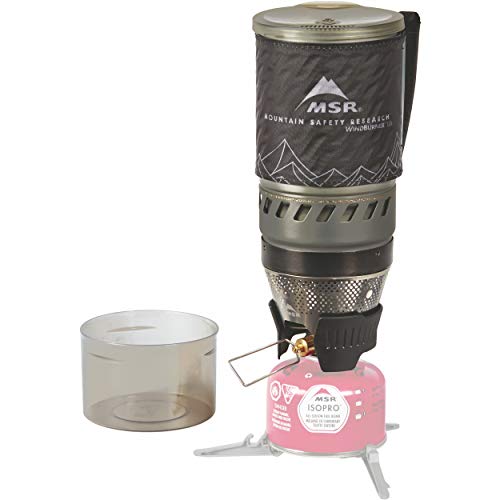
Wind is the Flash’s natural enemy. Its burner sits partly exposed, and a steady 15 mph breeze stretches boil times and drinks fuel.
The WindBurner’s radiant burner is fully enclosed under the pot, so it keeps working in gusts that would have you stacking a rock wall around a Flash. Its pressure regulator holds full output on a half empty canister and in the cold.
The costs:
- Weight: About two extra ounces at 15.5 oz
- Boil time: Slower, around four and a half minutes per liter
- Ignition: No igniter at all, so a lighter is mandatory
- Price: Roughly 60 dollars higher
Buy it for exposed ridgelines, shoulder season, and group trips. Skip it if you camp mostly in fair weather below treeline, where the Flash is faster and cheaper.
Jetboil MiniMo Stove Cooking System
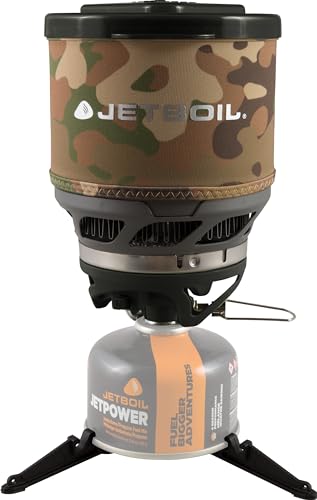
The MiniMo is what the Flash grows into if you actually cook.
- Simmer: Its regulated valve turns down to a true simmer, so rice and eggs survive.
- Pot shape: Short and wide enough to eat from with a normal spoon instead of chasing dinner down a tall cup.
- Weight: Nearly identical at about 14 ounces.
- Cold performance: The regulator keeps output steady in cold that would starve a Flash.
- Boil time: Slower, Jetboil lists about 2 minutes 15 seconds per half liter.
- Price: It runs 30 to 40 dollars more.
Buy it if dinner means cooking rather than rehydrating. Skip it if you only ever boil water, because the Flash does that faster for less money.
The Bottom Line
Buy the Flash if your backcountry menu is coffee, oatmeal, and freeze dried pouches and you camp mostly in three season conditions. In that role it is close to unbeatable for the price.
- Cooks should spend up for the MiniMo.
- Foul weather campers should take the WindBurner.
- Gram counters willing to babysit an open flame can go lighter still with a BRS 3000T and a bare titanium pot at a fraction of the Flash’s weight.
Everyone else can put the Flash in the pack and stop thinking about stoves, which is the best compliment a piece of gear can get.


